
Lactase Enzyme Activity Explained: How to Understand and Choose the Right Activity
Xi’an, Shaanxi, China – September 7, 2026 – Choosing the right lactase enzyme can be challenging for food manufacturers and ingredient buyers, especially when suppliers offer different activity specifications and testing units. Simply comparing the price per kilogram may not provide a complete picture of product value.
Lactase activity directly affects enzyme dosage, processing efficiency, and product performance. By understanding how activity is defined and evaluated, buyers can make more informed purchasing decisions and identify the most suitable lactase specification for their applications.
What Is Lactase Enzyme Activity?
Lactase activity represents the catalytic efficiency of the enzyme and serves as the core indicator for evaluating the strength of lactase preparations. Under specified temperature and pH conditions, one unit of lactase can hydrolyze a certain amount of lactose within a given period. The higher the activity value, the stronger its capacity to break down lactose. For lactase powder of the same weight, a higher activity unit means a lower actual dosage in formulations.
How Is Lactase Enzyme Activity Measured?
Lactase enzyme activity is typically expressed in activity units, such as ALU/g for powder products and ALU/mL for liquid products. A higher activity value generally indicates stronger catalytic activity under the specified testing conditions.
However, enzyme activity should not be evaluated based on the numerical value alone. The testing method, substrate concentration, pH, temperature, reaction time, and other analytical conditions can all affect the reported enzyme activity. Therefore, when comparing lactase products from different suppliers, buyers should also review the enzyme activity specifications and testing methods provided in the technical documentation or Certificate of Analysis (COA).
For nutritional supplement manufacturers, understanding these factors is essential when determining the appropriate enzyme dosage and evaluating whether a lactase enzyme is suitable for a specific formulation or production process.
How to Choose the Right Lactase Enzyme Activity?
1 Confirm end use and activity unit standard
For dietary supplements capsules and tablets: select ALU (Acid Lactase Unit), which adapts to the acidic environment of the stomach. Common available grades include 20000 ALU/g, 100000 ALU/g and 150000 ALU/g. For dairy processing (milk, yogurt, lactose free milk): select NLU (Neutral Lactase Unit) suitable for neutral pH conditions.Note: ALU and NLU cannot be directly converted. Do not use the two units interchangeably.
2 Select grade based on target lactose hydrolysis level
Choose enzyme activity according to the amount of lactose to be decomposed in finished goods:Standard low dose supplements for mild lactose intolerance: 20000-100000 ALU/g, cost-effective option.High-potency formulas targeting severe lactose intolerance: opt for 160000 ALU/g high-activity lactase to reduce filling weight inside capsules.
3 ake production process into account
High activity lactase requires low addition rate, well suited for small size capsules with limited fill volume.Activity loss will occur under high temperature granulation or drying steps. Extra activity margin shall be reserved according to actual processing conditions.
4 Balance performance and raw material cost
Higher activity grades carry higher unit price, yet lower inclusion rate in formulas. Do not blindly pursue maximum activity. Match the grade to your formula to control total cost and prevent over dosage waste.
5 Pay attention to storage and shelf life activity retention
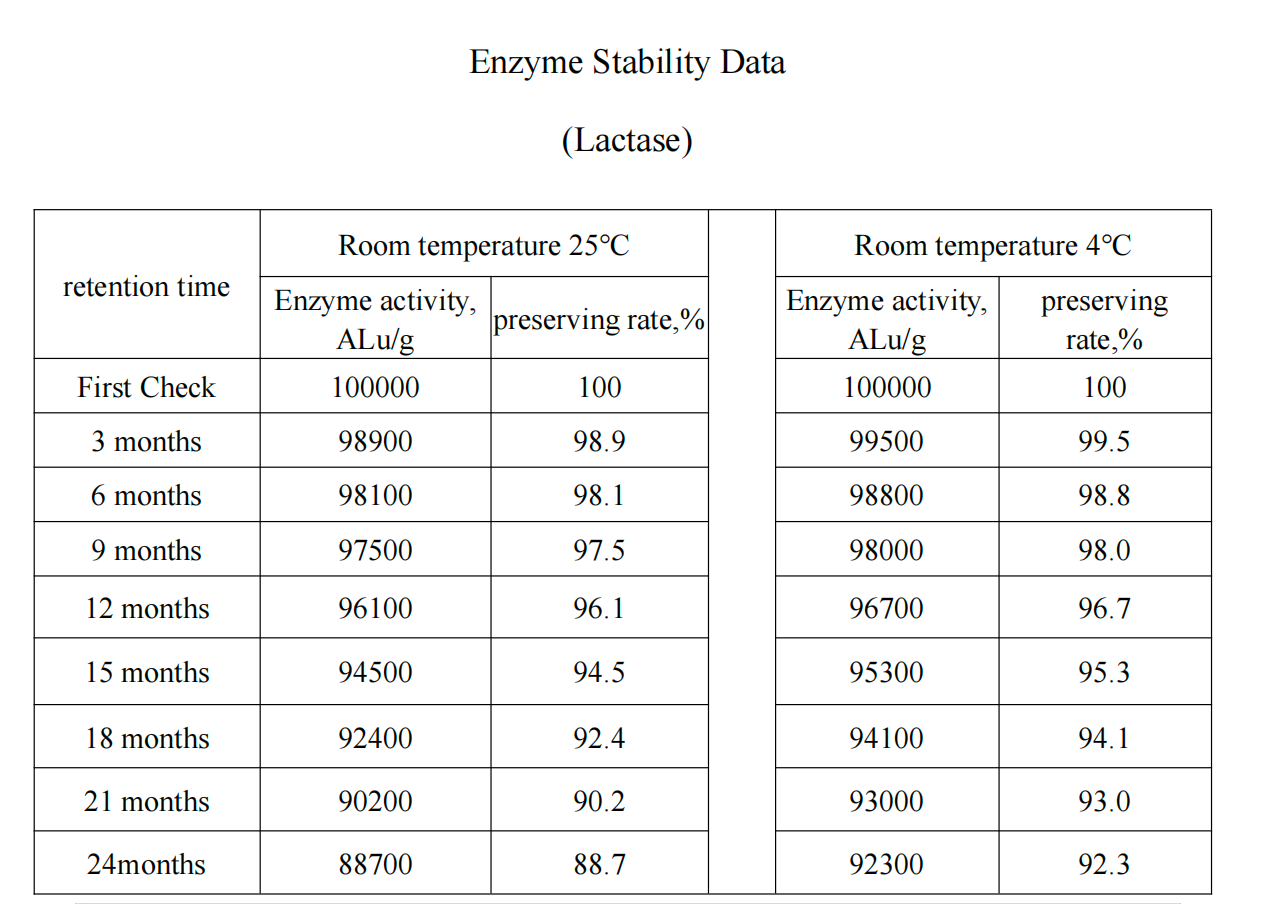
Enzyme activity gradually declines over storage. Confirm the supplier’s guaranteed residual activity throughout shelf life and check actual tested values on COA documents.
How stable is lactase enzyme activity?
Long‑term stability testing demonstrates reliable activity retention of lactase. Please refer to the table below for enzyme preservation performance at 25℃ and 4℃ within 24month storage period.
About Us
Shaanxi ShineHerb Biotech Co., Ltd. is a professional enterprise engaged in the research, production, and exports of Enzyme preparations, Natural plant extracts, Vitamins, Amino acids, and Pharmaceutical intermediates. We are committed to providing global customers with competitive pricing, stable and reliable product quality, and professional, efficient services.
Media Contact
Company Name: Shaanxi ShineHerb Biotech Co., Ltd.
Contact Person: Media Relations
Email: Send Email
Country: China
Website: https://www.shineherbbio.com/


