
Mooring Buoy Selection Guide for Safer Marine Operations
A mooring system is only as reliable as the components connecting the vessel, anchor, and water surface. Choosing the right Mooring Buoy helps you improve vessel control, reduce maintenance work, and create more predictable operating conditions around ports, terminals, anchorages, and marine construction areas.
What Is a Mooring Buoy?
A mooring buoy is a floating structure connected to an anchoring system below the water. It provides an accessible point where a vessel, workboat, Floating Platform, or marine structure can be secured without repeatedly deploying and recovering its own anchor.
For port operators and marine contractors, the main value of a mooring buoy is not flotation alone. It creates a visible, stable, and reusable connection point between the vessel and the underwater mooring arrangement.
A complete mooring buoy system usually includes:
-
The buoy body
-
An internal buoyancy core
-
A central load-bearing structure
-
Mooring eyes or connection fittings
-
Chains, shackles, swivels, and anchors
Each component must work as part of one system. Selecting the buoy without reviewing the anchor, chain, and expected working load can lead to unnecessary movement or premature wear.
Why Mooring Buoys Are Important for Port and Marine Projects
Marine operations often involve changing water levels, wind direction, currents, vessel movements, and repeated loading. A properly selected marine mooring buoy helps the system respond to these changing conditions without losing its intended function.
For port constructors, public utilities, water agencies, and international engineering contractors, a mooring buoy can support several operational objectives:
- Provide a clearly visible vessel connection point
- Reduce repeated anchoring near sensitive underwater infrastructure
- Improve the organization of designated mooring areas
- Simplify temporary or long-term vessel positioning
- Support inspection, maintenance, and project vessels
A reliable buoy also helps your operators identify the mooring location quickly, particularly in busy working areas where clear positioning is important.
Corrosion Resistance Reduces Maintenance Work
Traditional metal buoy structures may require regular coating inspection, rust removal, and surface repair. These activities add labor, equipment, and vessel time to the operating budget.
A modern polyethylene mooring buoy offers a corrosion-resistant exterior that does not rust when exposed to seawater. This makes it useful for ports, marinas, open-water anchorages, aquaculture areas, and offshore infrastructure projects.
The smooth external surface also makes routine cleaning more manageable. Marine growth can still develop on any submerged or water-contact surface, but a low-maintenance shell helps reduce the amount of corrective work required compared with heavily corroded structures.
For you as a project buyer, this means the purchase decision should not be based only on the initial buoy price. Inspection frequency, repair requirements, handling costs, and replacement intervals all affect the real lifecycle cost.
Foam-Filled Construction Supports Continued Flotation
One of the most important features of a heavy-duty mooring buoy is its internal buoyancy design.
Many modern buoys use a closed-cell foam core enclosed by a durable outer shell. If the exterior is accidentally scratched, punctured, or damaged during operation, the internal foam continues to provide buoyancy.
This construction helps the buoy remain afloat even when the shell is no longer completely intact. It does not remove the need for inspection, but it gives the system an additional level of flotation security.
A foam-filled mooring buoy is therefore suitable for projects where contact with workboats, chains, floating equipment, or debris may occur.
When comparing products, you should ask:
-
Is the buoy internally foam-filled?
-
Does the foam absorb water?
-
Can flotation be maintained after local shell damage?
-
How is the internal structure connected to the external hardware?
These questions are more useful than comparing exterior dimensions alone.
A Central Steel Structure Carries the Mooring Load
The outer buoy body provides flotation and visibility, but the main mooring force should be transferred through a properly designed internal load-bearing structure.
A mooring buoy with a central steel frame connects the upper mooring point to the lower chain or anchor connection. This allows vessel load to pass through the structural core rather than relying on the outer shell.
External fittings may be galvanized or manufactured from corrosion-resistant steel, depending on your project requirements. The correct option depends on expected load, water conditions, maintenance planning, and service environment.
You should review the safe working load of the complete structural arrangement, not just the buoyancy capacity of the float body.
Buoyancy tells you how the buoy floats. Structural capacity tells you how the buoy handles the mooring force. Both are essential, but they describe different functions.
Lightweight Construction Simplifies Handling
Weight has a direct effect on transport, lifting, installation, and replacement.
A lightweight floating mooring buoy can be easier to move around the yard, load onto a workboat, position near the installation point, and recover for inspection. This is especially useful for remote projects or sites with limited lifting equipment.
Lower handling weight may help you:
-
Reduce lifting equipment requirements
-
Shorten installation preparation
-
Improve workboat space utilization
-
Simplify removal during maintenance
-
Lower manual handling risks
The buoy still needs a strong internal structure, but the lighter outer construction can make the complete installation process more efficient.
Impact Resistance Matters in Active Working Areas
Mooring buoys are often installed where workboats, barges, service vessels, floating equipment, and changing currents are present.
A rigid structure can suffer permanent deformation after a strong impact. A flexible polyethylene shell can absorb part of the impact energy and recover its shape after moderate contact.
This is particularly useful for a port mooring buoy operating in an active construction or service area. The ability to withstand repeated minor contact can help preserve the buoy body and reduce cosmetic or structural damage.
Impact resistance should still be evaluated together with wall thickness, internal foam, central framework, and connection design. No single feature can guarantee performance under every collision condition.
How Do You Choose the Correct Mooring Buoy Size?
The right buoy size depends on more than vessel length.
You should consider vessel displacement, expected mooring load, water depth, current speed, wave conditions, wind exposure, chain weight, and the required freeboard.
A larger buoy provides more displacement, but selecting the largest available model is not always the most efficient solution. An oversized unit may increase transport and installation costs without improving the holding capacity of the anchor system.
A practical selection process includes:
- Confirm the vessel or floating structure details.
- Estimate the maximum expected mooring load.
- Review the underwater chain and connection weight.
- Confirm the required reserve buoyancy.
- Evaluate wave, current, and tidal conditions.
- Match the buoy structure to the anchor system.
Common buoy capacities may include 500 L, 750 L, 1,250 L, 1,500 L, and 2,000 L, but the final selection should be based on engineering data rather than nominal volume alone.
Custom Mooring Buoys for Project-Specific Requirements
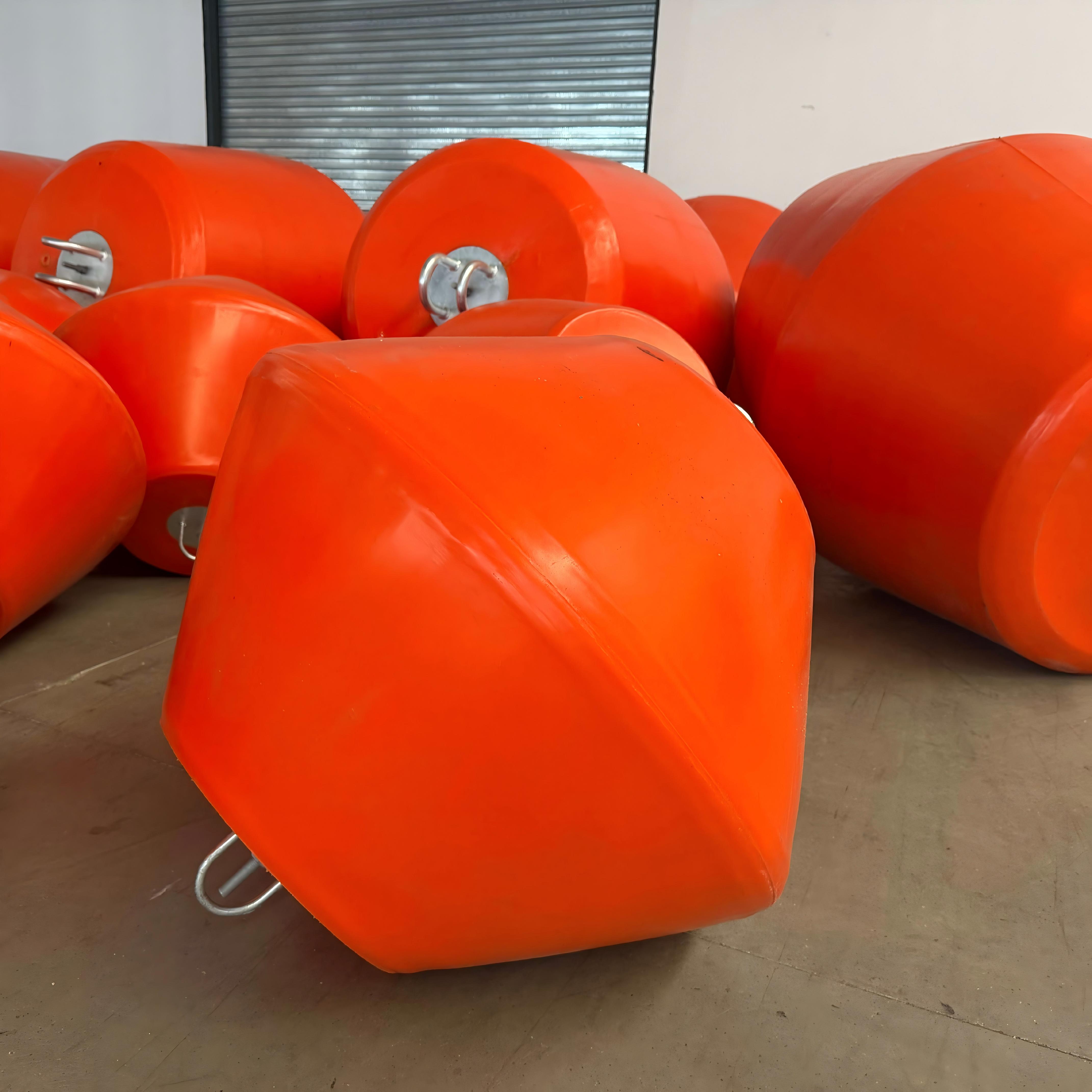
Standard products are suitable for many applications, but some projects require customized dimensions, connection points, colors, markings, or structural configurations.
A custom mooring buoy solution may include:
-
Project-specific buoyancy volume
-
Alternative upper and lower connection fittings
-
Custom identification numbers
-
High-visibility color selection
-
Reflective markings
-
Project logos or molded identification
-
Galvanized or stainless-steel hardware
-
Special lifting and handling points
Customization is particularly useful when the buoy must match an existing mooring layout or meet the equipment standards of a port authority, engineering contractor, or public utility.
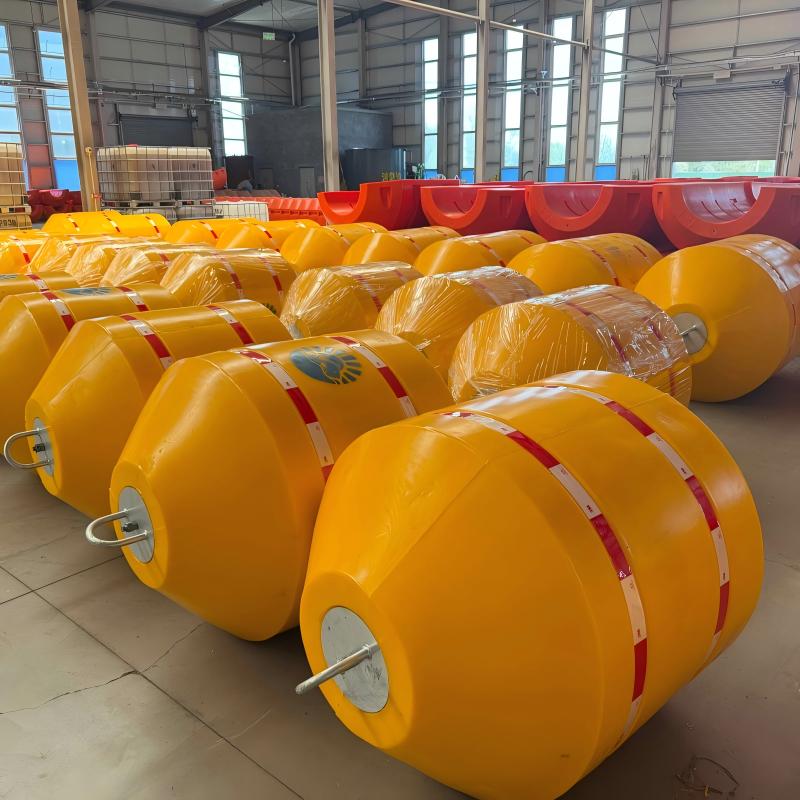
Recent Mooring Buoy Shipment Prepared for Installation
A recent factory order involved multiple foam-filled mooring buoys produced for a marine infrastructure project. The customer required corrosion-resistant buoy bodies, central load-bearing frames, and clearly identified connection fittings.
Before shipment, the factory team checked:
-
External dimensions and visual condition
-
Buoy body integrity
-
Upper and lower connection points
-
Central framework assembly
-
Hardware quantity
-
Product labels and package numbers
The units were arranged to reduce movement during transport, while separate hardware was grouped and labeled for easier identification at the installation site.
This shipment approach helped the customer receive a project-ready system rather than a collection of unorganized components.
What Information Should You Send to a Mooring Buoy Supplier?
A clear inquiry allows the supplier to recommend a more suitable configuration.
You should provide the vessel type, vessel displacement, expected maximum load, water depth, local wave and current conditions, preferred buoyancy, connection requirements, and expected service environment.
Where available, include drawings of the anchor, chain, shackles, and mooring arrangement.
The more complete your information is, the easier it becomes to evaluate mooring buoy capacity, structural configuration, and hardware selection before production begins.
Conclusion
The right mooring buoy provides more than a visible floating connection point. It helps you improve vessel positioning, reduce corrosion-related maintenance, simplify installation, and maintain reliable flotation under long-term marine exposure.
For ports, marine engineering projects, reclamation developments, public utilities, and water-management operations, the best solution is one that matches buoyancy, structural load, environmental conditions, and installation requirements as one complete system.
Frequently Asked QuestionsWhat is the difference between buoyancy capacity and mooring capacity?
Buoyancy capacity describes how much flotation the buoy provides. Mooring capacity describes how much load the internal frame and connection system can safely transfer. They should be evaluated separately.
Can a foam-filled mooring buoy remain afloat after shell damage?
Closed-cell foam can continue providing flotation after localized shell damage. The buoy should still be inspected and repaired before extended operation.
How often should a mooring buoy be inspected?
Inspection frequency depends on vessel traffic, weather exposure, load conditions, and local regulations. Connection fittings, chains, shackles, and the buoy body should be checked regularly.
Can mooring buoys be customized for an existing anchor system?
Yes. Dimensions, buoyancy, fittings, markings, and hardware can be adjusted to match an existing mooring arrangement when sufficient technical information is provided.
Media Contact
Company Name: Shandong Binzhou Giant Rubber Rubber & Plastic Co., Ltd.
Email: Send Email
Country: China
Website: https://www.pefloaters.com/


