
Paint Plastic Bucket Suppliers Expand Options for Global Buyers in 2026
Chuzhou, Anhui, China – October 24, 2026 – Global paint demand is changing the way buyers look at the Paint Plastic Bucket supply chain. And honestly, it’s not just about price anymore. Grand View Research’s Paints and Coatings Market Report points to construction, infrastructure, and renovation as ongoing demand drivers. Smithers’ plastics packaging research, meanwhile, puts lightweighting, recycled content, and supply-chain efficiency high on the packaging priority list. So the bucket ends up being more than just a container. It helps protect viscosity, color consistency, and shelf life during storage and transport.Tom Bowtell, Chief Executive of the British Coatings Federation, has made a pretty practical point: coating performance and environmental responsibility need to move forward together. That matters a lot when you’re comparing global suppliers. A cheap bucket isn’t automatically a reliable one. Wall thickness, lid fit, handle strength, stacking performance, and printing quality can all decide whether a shipment arrives safely. And small failures? They get expensive fast.This 2026 supplier overview is focused on manufacturers that serve international buyers. It looks at production capacity, quality systems, customization, lead times, export experience, and documentation. ISO 9001 certification can be a sign of controlled manufacturing, while ISO 14001 may back up environmental management claims. Still, buyers should verify certificates directly. Not every supplier lays out information clearly.Recycled polypropylene is getting more attention, but its consistency can vary. That’s worth a closer look. Color matching can also get tricky across production batches. Samples are essential—don’t skip that step.The strongest suppliers tend to combine dependable molding with responsive communication. They get paint chemistry, regional packaging expectations, and practical logistics. That said, market data can’t replace factory audits or performance testing. Global buyers should compare evidence, not promises.

What Defines a Reliable Paint Plastic Bucket Supplier in 2026
In 2026, reliable Paint Plastic Bucket suppliers must prove performance, not merely display attractive catalogs. Experienced buyers inspect resin consistency, wall thickness, lid fit, and handle strength before approving volume orders. A bucket should survive stacking, transport vibration, and repeated opening without cracking or losing its seal. Small details matter.A professional supplier provides clear specifications for capacity, dimensions, weight, color tolerance, and closure design. They should share recent test records, production photos, and batch traceability documents. Independent sampling still matters. I test filled buckets for leakage, drop resistance, and deformation after stacking. I once accepted a sample too quickly; its lid warped during a warm warehouse test. Different batches can reveal uneven production.Reliable communication is equally important for global buyers. The supplier should confirm mold details, minimum order quantities, lead times, packing methods, and shipping marks in writing. Fast replies do not replace technical evidence. Export experience should include stable carton packing, moisture protection, and realistic delivery updates. No supplier is perfect. Strong factories may still face color variation, delayed components, or rejected units. Honest reporting and documented corrective action deserve careful attention.
2026 Best Paint Plastic Bucket Suppliers for Global Buyers – What Defines a Reliable Paint Plastic Bucket Supplier in 2026
Supplier evaluation benchmarks for paint plastic buckets used in architectural coatings, industrial paints, and construction chemicals.
| Evaluation Dimension | Recommended 2026 Benchmark | Typical Technical Evidence | Why It Matters to Global Buyers | Suggested Acceptance Check | Priority |
|---|---|---|---|---|---|
| Container Material | Virgin or controlled-grade PP or HDPE selected according to product chemistry, impact requirements, and filling process. | Resin specification, technical data sheet, certificate of analysis, and material traceability record. | Correct material selection helps reduce cracking, chemical interaction, leakage, and deformation during transport. | Confirm polymer grade, melt-flow range, pigment system, and compatibility with water-based or solvent-containing coatings. | High |
| Common Capacity Range | Commercial sizes commonly include 1 L, 2.5 L, 4 L, 5 L, 10 L, 15 L, and 20 L, subject to market requirements. | Approved drawing showing nominal volume, brimful volume, fill level, and usable headspace. | Accurate capacity supports local filling lines, retail labeling, pallet planning, and regulatory declarations. | Measure sample volume with calibrated equipment and compare the result with the approved specification. | High |
| Dimensional Consistency | Critical dimensions should be controlled against an approved drawing; a practical starting target is approximately ±1% for major dimensions, unless the design requires tighter control. | Dimension inspection report, control plan, first-article approval, and sampling records. | Stable dimensions are important for automated filling, lid fit, stacking, labeling, and pallet efficiency. | Inspect height, diameter, wall thickness, opening, handle position, and lid fit across production samples. | High |
| Leak Resistance | Each approved design should pass an internal leak test appropriate to the product, closure, and transport orientation. | Leak-test method, test pressure or inversion time, sample quantity, and corrective-action records. | Leakage can create product loss, damaged cartons, contamination, customs delays, and customer complaints. | Conduct filled-container testing after closure, handling, and temperature conditioning. | High |
| Lid and Closure Performance | Closure should provide consistent engagement, tamper evidence where required, and opening performance suitable for the filling line and end user. | Closure drawing, opening-force or torque data, tamper-evident design details, and fit-test records. | A reliable closure protects paint quality and provides visible evidence of possible interference or misuse. | Check lid retention, seal integrity, reclosure performance, and compatibility with filling equipment. | High |
| Handle and Ergonomics | Handle geometry should support the filled weight and intended carrying method; edges should be smooth and free from sharp flash. | Handle load test, fatigue or cycle test, ergonomic review, and production inspection standard. | Good ergonomics reduce handling injuries, returns, and damage during retail and job-site use. | Test filled containers for lifting, carrying, repeated handling, and handle attachment failure. | Medium |
| Stacking and Transport Strength | Performance should be validated for the planned pallet pattern, filled weight, storage duration, and distribution route. | Compression test, stacking test, pallet pattern, warehouse temperature range, and transport simulation report. | Paint Buckets may experience stacking loads, vibration, impacts, and temperature changes during international distribution. | Run filled-container tests under expected warehouse and transport conditions before mass production. | High |
| Color and Surface Quality | Color should be controlled using an approved master sample or an instrumental color tolerance agreed in advance. | Color standard, spectrophotometer records where applicable, gloss requirement, and defect classification guide. | Consistent appearance supports product recognition, premium positioning, and accurate brand-color reproduction without relying on a specific brand. | Inspect color, gloss, warpage, sink marks, weld lines, black specks, scratches, and molding flash. | Medium |
| Printing and Label Compatibility | Decoration method should match the surface material and expected exposure to moisture, abrasion, chemicals, and handling. | Ink or label specification, adhesion test, rub test, artwork approval, and barcode verification record. | Readable labels support product identification, batch traceability, retail scanning, and regulatory communication. | Verify print adhesion, barcode readability, label position, color accuracy, and resistance to rubbing or moisture. | Medium |
| Quality Management | A documented quality system with controlled procedures, inspection records, nonconformance handling, and corrective actions. | Quality manual, process control plan, inspection checklist, calibration records, and audit results. | Documented controls reduce variation and make supplier performance easier to verify across repeat orders. | Review recent production records and perform a pre-shipment inspection against approved samples. | High |
| Batch Traceability | Every shipment should be traceable to production date, mold or line, resin lot, operator records, and inspection results. | Lot-code format, production log, resin batch record, retention-sample policy, and complaint-tracking process. | Traceability speeds investigation, targeted recalls, root-cause analysis, and replenishment decisions. | Request a sample traceability exercise from finished bucket back to raw-material documentation. | High |
| Minimum Order Quantity | MOQ should be stated separately for standard products, custom molds, custom colors, and printed decoration. | Formal quotation showing MOQ by configuration, tooling conditions, and mixed-container options. | Transparent MOQ information helps buyers control inventory exposure and launch products in multiple markets. | Compare MOQ with forecast demand, pallet quantity, container utilization, and cash-flow requirements. | Standard |
| Lead-Time Reliability | Supplier should provide a written production schedule and communicate capacity constraints before order confirmation. | Order confirmation, capacity plan, historical on-time-delivery data, and escalation procedure. | Predictable delivery supports paint filling schedules, seasonal demand planning, and overseas inventory management. | Review the last several comparable orders or request a documented on-time-delivery KPI. | High |
| Export Packaging | Packaging should protect buckets and lids from dust, deformation, moisture, and abrasion while maximizing pallet utilization. | Pallet diagram, carton or stretch-wrap specification, container-loading plan, and drop or handling test results. | Effective export packaging reduces transit damage and improves freight-cost efficiency. | Approve a packed sample and verify pallet stability, corner protection, wrapping, and container loading. | High |
| Sustainability Data | Supplier should disclose resin composition, recycled-content percentage when used, recyclability information, and applicable local restrictions. | Material declaration, recycled-content evidence, environmental statement, and waste-reduction records. | Clear environmental data helps buyers meet customer requirements and packaging obligations in different markets. | Verify claims against purchasing documents, material records, and destination-market requirements. | Medium |
| Technical Service | Supplier should provide drawings, samples, filling-line support, complaint response, and change-notification procedures. | Technical contact details, sample approval workflow, response-time commitment, and engineering-change notice process. | Fast technical support reduces qualification time and limits disruption when specifications or production conditions change. | Evaluate response quality during sampling, pilot filling, and pre-production approval. | Medium |
| Buyer note: The benchmarks above are general procurement targets rather than claims about any individual supplier. Final acceptance should be based on an approved drawing, filled-product compatibility testing, validated transport conditions, and destination-market requirements. |
Key Materials and Manufacturing Standards for Paint Buckets
For global buyers in 2026, a reliable Plastic Paint Bucket begins with controlled material selection. Most pails use polypropylene for rigidity, low weight, and resistance to water-based coatings. High-density polyethylene can improve impact performance during cold-weather transport. Virgin resin often gives cleaner surfaces, while verified recycled content can reduce material use. However, recycled percentages need documented testing, not optimistic claims. Ask suppliers for resin certificates, batch records, and a clear material specification. Compatibility testing remains important for solvent-based formulas.Manufacturing quality depends on more than a polished sample. Injection molding should control wall thickness, cooling time, and shrinkage. Uneven walls may cause bulging, weak stacking, or lid leakage. Inspect the rim closely; a small deformation can break the seal. Useful checks include drop testing, compression testing, torque checks, and leak testing. Test filled buckets at realistic temperatures, not only in a warm factory. That detail matters.For international purchasing, request documented quality procedures aligned with ISO 9001, where applicable. Factories should maintain traceability from resin batch to finished pallet. They should also verify handle strength, lid fit, print adhesion, and pallet stability. Dimensions must match automated filling lines and local transport equipment. Do not accept “export quality” as a technical standard. Ask for inspection reports, sample retention, and agreed acceptance limits before production. Even careful specifications can miss real-world abuse. A trial shipment often reveals scuffing, odor, or stacking problems that laboratory tests overlook.
2026 Best Paint Plastic Bucket Suppliers for Global Buyers
Typical density comparison of plastic resins commonly considered for paint buckets and their lids.
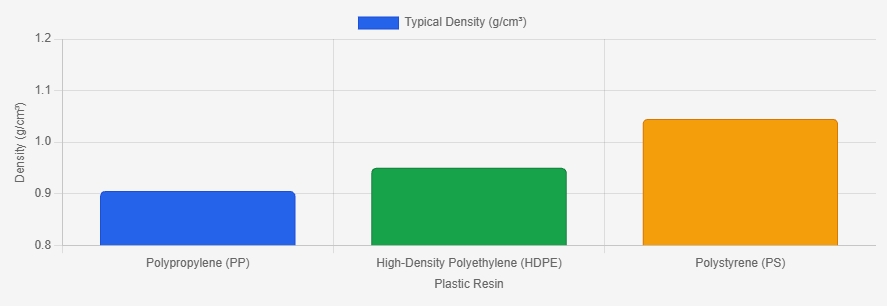
Manufacturing reference: HDPE and PP are widely used for paint pails because of their chemical resistance, impact performance, and processability. Density values are representative engineering values measured according to ISO 1183 or ASTM D792. Global buyers should also request verification of tensile properties under ISO 527 or ASTM D638, dimensional tolerances, leak resistance, pigment compatibility, recycled-content declarations, and applicable food-contact or chemical-packaging compliance where relevant.How to Evaluate Supplier Quality, Capacity, and Customization
When sourcing Paint Bucket Plastic, buyers should test more than appearance. A glossy sample can hide weak walls or uneven handles. I have learned this during factory evaluations. Request production samples from different batches, not just one showroom piece. Check lid fit, rim strength, leakage resistance, and stacking stability. A filled bucket should survive handling without cracking or deforming.Supplier quality depends on documented controls. Ask how workers measure bucket weight, wall thickness, color consistency, and closure pressure. Review inspection records, calibration dates, and rejected-product procedures. An independent factory audit can reveal crowded storage, poor resin protection, or rushed packing. Do not accept vague claims. Request test results and clear acceptance standards. Small defects become expensive problems.Capacity needs practical proof. Compare monthly output with mold numbers, machine sizes, staffing, and maintenance schedules. A supplier may promise large volumes but lack backup equipment. Ask for a production plan showing raw material arrivals, molding dates, printing, inspection, and shipment preparation. For customization, confirm mold ownership, handle design, lid color, label position, and packaging details in writing. Test printed artwork under rubbing and moisture exposure. Some color matching still needs adjustment. That is normal, but it should be recorded before mass production. Check the pre-production sample carefully, even when deadlines feel uncomfortable.
Global Compliance, Packaging, and Shipping Considerations
2026 Best Paint Plastic Bucket Suppliers for Global BuyersGlobal Compliance, Packaging, and Shipping ConsiderationsA reliable bucket supplier should provide resin identification, batch traceability, and chemical-resistance evidence. Requirements differ by destination. For paint packaging, buyers should confirm compatibility with water-based and solvent-based formulas. A clean appearance is not proof. Practical audits often uncover weak lids, uneven walls, or missing test records.The OECD’s Global Plastics Outlook reported 353 million tonnes of plastic waste in 2019, with packaging representing about 40 percent. This pressure makes material efficiency commercially important. Ask for recycled-content documentation, restricted-substance declarations, and evidence supporting local labeling rules. Recycled resin can reduce impact, but it may change color, odor, or impact strength. That trade-off deserves testing, not optimistic wording.Shipping design affects landed cost. Nested buckets save container space, while rigid pallets reduce deformation during handling. Confirm stack-load, drop, leak, and lid-seal tests before production. For export pallets, check destination requirements, including ISPM 15 treatment for solid wood. UNCTAD’s Review of Maritime Transport 2023 highlights continuing volatility in freight networks. Delivery promises should include buffer time. A spreadsheet may look precise. Ports remain unpredictable. Use approved samples, pre-shipment inspection, and a written corrective-action process.
Comparing Prices, Minimum Orders, and Long-Term Supply Terms
Global buyers should compare landed cost, not only the quoted unit price. A Plastic Paint Bucket With Lid may include resin, molding, lid fitting, printing, pallets, and export packing. In procurement reviews, a 20-liter bucket can show a small factory-price gap but a large freight difference. Volume changes everything. Ask for prices at 1,000, 5,000, and 20,000 pieces. Request separate tooling, color, handle, and lid charges.
The PlasticsEurope Plastics—The Fast Facts 2024 report recorded 413.8 million tonnes of global plastics production in 2023. This scale supports competitive resin pricing, but oil-linked polymers still create monthly changes. A fixed price should state its validity period, resin basis, and adjustment formula. Minimum orders also need careful comparison. A low MOQ may carry a higher unit price, while a large MOQ can leave unused stock and cash tied up.
Long-term supply terms deserve equal attention. The OECD Global Plastics Outlook projects plastic waste could reach 1,014 million tonnes by 2060, compared with 353 million tonnes in 2019. Buyers should request recycled-content options, batch traceability, and material test records. These clauses may increase current costs, yet they improve audit readiness and supply resilience. Payment terms, defect allowances, replacement timing, and annual capacity reservations should appear in the contract. Some suppliers promise stable supply without reserving production slots. That assumption is risky. Recheck it.
Best Practices for Selecting and Auditing International Suppliers2026 Best Paint Plastic Bucket Suppliers for Global Buyers
Selecting an international supplier requires more than comparing the Plastic Paint Bucket Price. A low quotation may hide weak lids, thin walls, unstable handles, or costly rejects. Request production samples in several sizes. Check wall thickness at the rim, base, and handle points. Measure capacity after stacking, not only before shipment. A reliable supplier should provide material specifications, batch records, inspection reports, and clear corrective actions.
Audit the factory’s process, even through a structured remote review. Ask to see resin storage, injection machines, mold maintenance, printing, packing, and finished-goods inspection. Confirm whether measurements are recorded for every batch.
Review export experience, production capacity, lead times, packaging strength, and payment terms. Verify applicable product and environmental documentation for each destination market. Documents can look perfect. Production may still vary.
Tips: Send a signed sample before mass production. Add color, weight, dimensions, lid fit, and drop-test requirements to the purchase contract. Inspect random cartons before shipment, including cartons from the middle of the stack. Compare the approved sample with actual goods. Keep photos and test results. Do not rely only on a polished factory tour. No audit is perfect. Recheck critical details when volumes increase.
Conclusion
Choosing the right Paint Plastic Bucket supplier in 2026 requires more than comparing unit prices. Reliable suppliers should use durable, chemical-resistant plastics, maintain consistent wall thickness, and follow disciplined manufacturing and quality-control procedures. Global buyers should assess production capacity, mold capabilities, color and printing options, sealing performance, and the supplier’s ability to support customized sizes or packaging. Clear documentation, sample testing, traceability, and stable lead times are essential indicators of professional operations.International purchasing also depends on compliance, safe export packaging, efficient container loading, and dependable shipping coordination. Buyers should compare minimum order quantities, payment terms, tooling costs, volume discounts, and long-term supply commitments rather than focusing only on the lowest quotation. Before placing large orders, conduct supplier audits covering facilities, equipment, inspection systems, worker safety, and shipment records. A balanced evaluation of quality, capacity, communication, customization, total cost, and continuity will help global buyers build a secure and sustainable Paint Plastic Bucket supply chain.
About Us
ASEVAT——Anhui Ruitu Communication Equipment Co., Ltd.
A professional plastic packaging company based in China., established in 2005, engaged in the research, development, sale and service of Plastic container packaging and printing.
Media Contact
Company Name: Anhui Ruitu Communication Equipment Co., Ltd.
Contact Person: Umetass
Email: Send Email
Country: China
Website: https://www.rtupack.com/


