
Cameron Reed’s VA appeal guide addresses questions families share
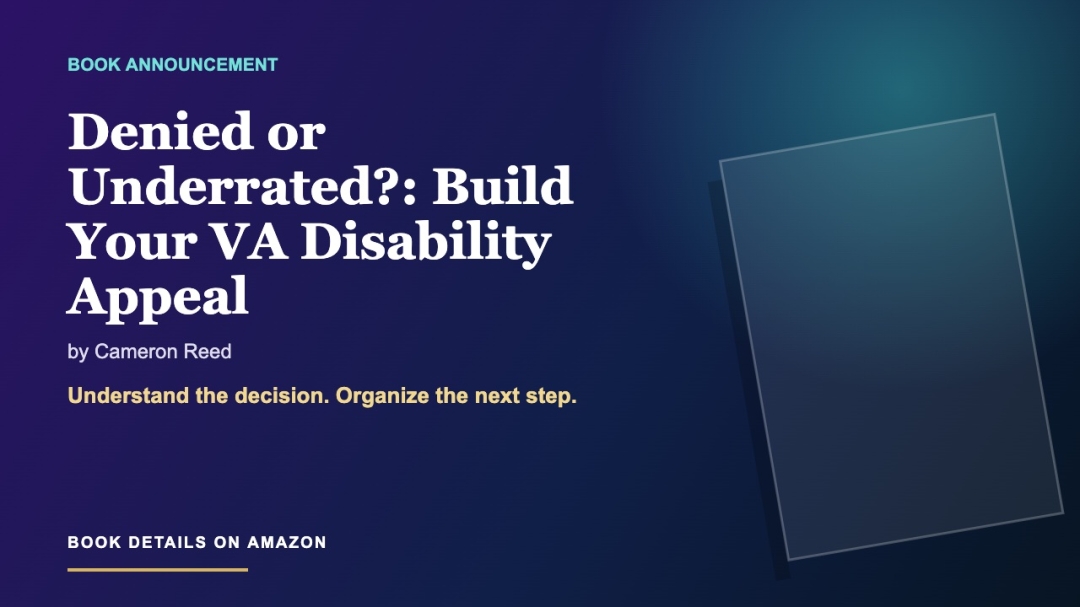
HOUSTON, TX – October 19, 2026 – Cameron Reed’s Denied or Underrated?: Build Your VA Disability Appeal, published October 18, 2026, introduces a practical guide for veterans, family members, and advocates seeking greater clarity after a VA disability denial or a rating they believe is too low. Supplemental Claim vs Higher-Level Review is among the questions the book addresses, alongside Board Appeals, rating criteria, and evidence preparation. Its relevance extends beyond choosing a review route: the guide also considers how readers can remain informed and involved when a decision raises questions about service connection, symptoms, or functional limitations.
For these readers, a VA decision is more than a collection of unfamiliar terms. It presents findings to understand, disputed issues to identify, and possible next steps to consider. The book responds to that situation with an organized framework rather than a promise of a particular outcome. Its themes matter because the intended audience includes not only the veteran whose claim is at issue, but also people trying to understand the process well enough to offer informed support.
A shared starting point for veterans and supporters
Family members and advocates may approach a decision with questions different from those of the veteran. Some may want to understand why service connection was denied; others may be trying to make sense of a rating that appears inconsistent with the limitations they know about. Reed’s guide brings those concerns into a common set of subjects: the reasons for the decision, the relevant rating rules, the available evidence, and the review options under consideration.
That shared focus gives the book an audience-centered purpose. It is designed for readers who want to approach VA review with greater clarity and organization, including those who are not approaching the decision alone. The guide’s discussion of medical, service, and lay evidence places different kinds of information within the same broader task. Rather than presenting support as simply collecting more records, it emphasizes understanding what a disputed issue calls for and how relevant information relates to it.
Connecting everyday limitations with rating questions
How do daily limitations compare with VA rating criteria? The book approaches that question by connecting symptoms and functional limitations with the applicable rating rules, using medical and lay evidence to support that comparison. The focus is not merely on describing a condition, but on understanding how the information about that condition relates to the criteria being considered. This is a central theme for readers who believe a disability rating does not adequately reflect their situation.
For families and advocates, that connection makes the discussion of evidence particularly relevant. Everyday observations and medical information are different forms of material, and the guide covers both within its evidence-building framework. Its stated scope supports a careful distinction: describing a limitation and determining how that limitation relates to a rating rule are connected tasks, but they are not interchangeable. The book directs attention to that relationship without promising that any description or record will produce a specific rating.
Understanding options before choosing a direction
The comparison between a Supplemental Claim and Higher-Level Review matters because readers need to understand more than the names of the available routes. Reed’s guide addresses choosing a review path that matches the problem, with discussion of new and relevant evidence, existing-error arguments, and Board evidence windows. It also includes Board Appeals in that broader comparison. These subjects frame route selection as part of an informed approach to the decision rather than an isolated choice made before the underlying issue is understood.
The book’s attention to important filing dates adds another dimension to those questions. Readers are encouraged to keep timing in view while considering the issue, evidence, rating rule, and review route together. For a family member or advocate helping someone organize the process, this makes the guide’s scope relevant to both understanding and preparation. The emphasis remains on approaching the available choices deliberately, not on suggesting that one route is the universal answer to a denial or disputed rating.
Making unfamiliar parts of the process more intelligible
Other topics address questions that can complicate a reader’s understanding of the overall decision. The guide includes the VA Combined Ratings Chart and explains why disability percentages are not simply added. That subject matters for readers trying to understand the relationship between individual ratings and a combined result. Alongside its coverage of favorable findings and potential errors, it broadens the discussion beyond the single question of whether a reader agrees with the outcome.
The book also covers preparation for a compensation and pension exam and review of the resulting report. These topics sit alongside its discussion of medical and lay evidence, keeping attention on how information is developed and understood throughout the process. For the intended audience, the value of that scope is its continuity: reading a decision, understanding evidence, considering an examination report, and evaluating review options are presented as related concerns rather than unrelated administrative tasks.
Informed participation when seeking help
Reed’s guide includes evaluating accredited help while remaining informed and involved. That theme is especially relevant to readers who want assistance without losing track of the questions their decision raises. The book does not frame organization as a substitute for accredited help; its description places the two within the same approach. Veterans, family members, and advocates can use its subject areas as a foundation for understanding what they need to discuss and why those issues matter.
Denied or Underrated?: Build Your VA Disability Appeal makes no promise of a particular outcome. Its central offering is a method for approaching a difficult decision with clearer questions and a more organized understanding of the process. Readers can find Cameron Reed’s book on Amazon: https://www.amazon.com/dp/B0HNH4GPY1
About Cameron Reed
Cameron Reed is the author of Denied or Underrated?: Build Your VA Disability Appeal. The book addresses VA disability decisions, evidence development, rating criteria, and review options for veterans, family members, and advocates. Its stated approach emphasizes clarity, organization, and informed participation, including consideration of accredited help, without promising a particular claim or appeal outcome.
Video Link: https://www.youtube.com/embed/WVwkLZ9fMqo
Media Contact
Company Name: Denied or Underrated?: Build Your VA Disability Appeal
Contact Person: Cameron Reed
Email: Send Email
Phone: 713-392-6222
Address:450 N Sam Houston Prky E Ste 103
City: Houston
State: TX
Country: United States
Website: https://urholtovns7m9xs1t60g3jqe.macaly.app


