
Max Avery Launches Synaptic, a Privacy-First Open-Source AI Assistant
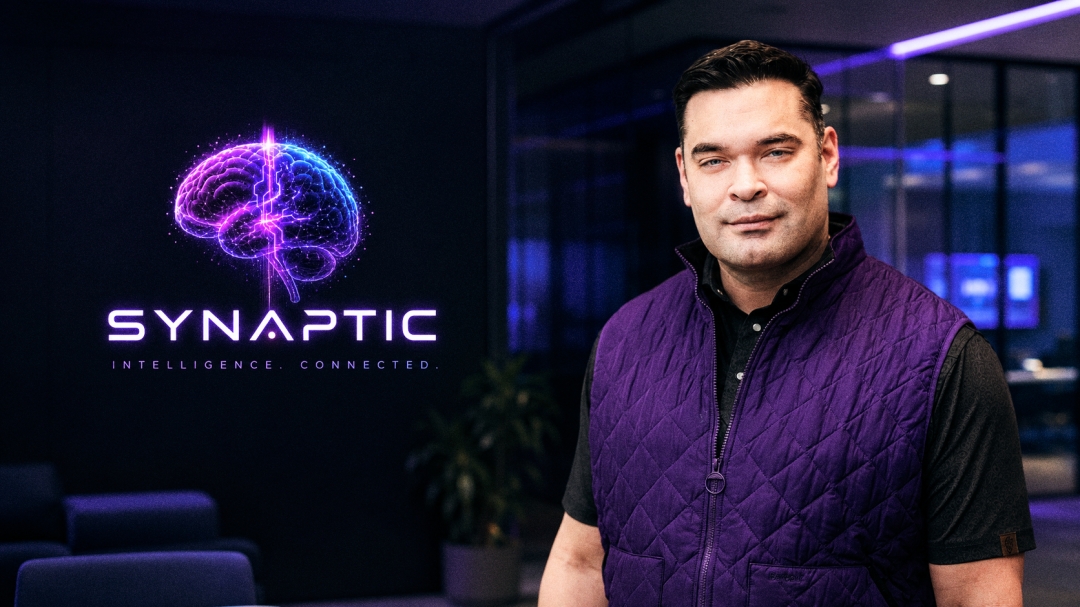
Max Avery has released Synaptic, a local-first intelligence layer that turns an Obsidian vault into a searchable, linked knowledge network. It runs on free tools, on your own hardware, and it is available now at no cost under an MIT license: https://github.com/highbaud/synaptic
Synaptic pairs Obsidian with Ollama so that the model work happens locally. The project ships with zero required cloud calls. When no local model is available, it falls back to deterministic heuristics rather than reaching for an outside API.The design premise is that a knowledge base should be compiled, not re-derived on every question. As the documentation puts it: “knowledge that is compiled compounds; knowledge that is retrieved is rediscovered.” Notes are processed once into structured, interconnected pages instead of being re-read from raw text each time you ask something.
What is in the release
- Local-first by default, with Ollama handling inference on your own machine
- Evidence-backed tagging, where each tag carries a confidence score, a source quote, and a privacy flag
- A privacy classifier that flags sensitive material and redacts it from generated output
- Seven MCP tools, so Claude Code or Codex can use the vault as native tooling
- Thirteen vault skills
- PARA organization (Projects, Areas, Resources, Archive) plus Inbox and System folders
- Contribution tracking that logs when a note actually feeds a real output such as an article, a brief, or a decision
Setup is a Python install and three commands: synaptic init, drop a note into the inbox, then synaptic scan and synaptic query. It requires Python 3.10 or later. Ollama is optional but recommended, with llama3.2:3b suggested for 8GB of RAM, llama3.1:8b for 16GB, and nomic-embed-text for embeddings.
On the price
Avery’s argument is about who this is for.
“Consultants are charging five to ten thousand dollars to stand up a private knowledge system for a firm, and a lot of what they hand over is configuration you could do yourself in an afternoon if someone documented it properly,” Avery said. “So I documented it properly and gave it away. There is no hidden name behind this, no vendor account, no upsell tier waiting once your notes are locked in. You clone the repo, you point it at your vault, and the sensitive thinking stays on your machine.” He added: “If you are an individual, this is your research memory. If you are a company, this is the version of an internal knowledge base your legal team does not have to argue about, because nothing leaves the building.”
Availability
Synaptic is available now on GitHub under the MIT license. Issues and contributions are open.
About Max Avery
Max Avery is CBDO and Principal of DAG.com writes and builds at the intersection of digital assets, private wealth infrastructure, and practical automation.
Media Contact
Company Name: Max Avery
Contact Person: Max Avery
Email: Send Email
Country: United States
Website: www.maxavery.org


